
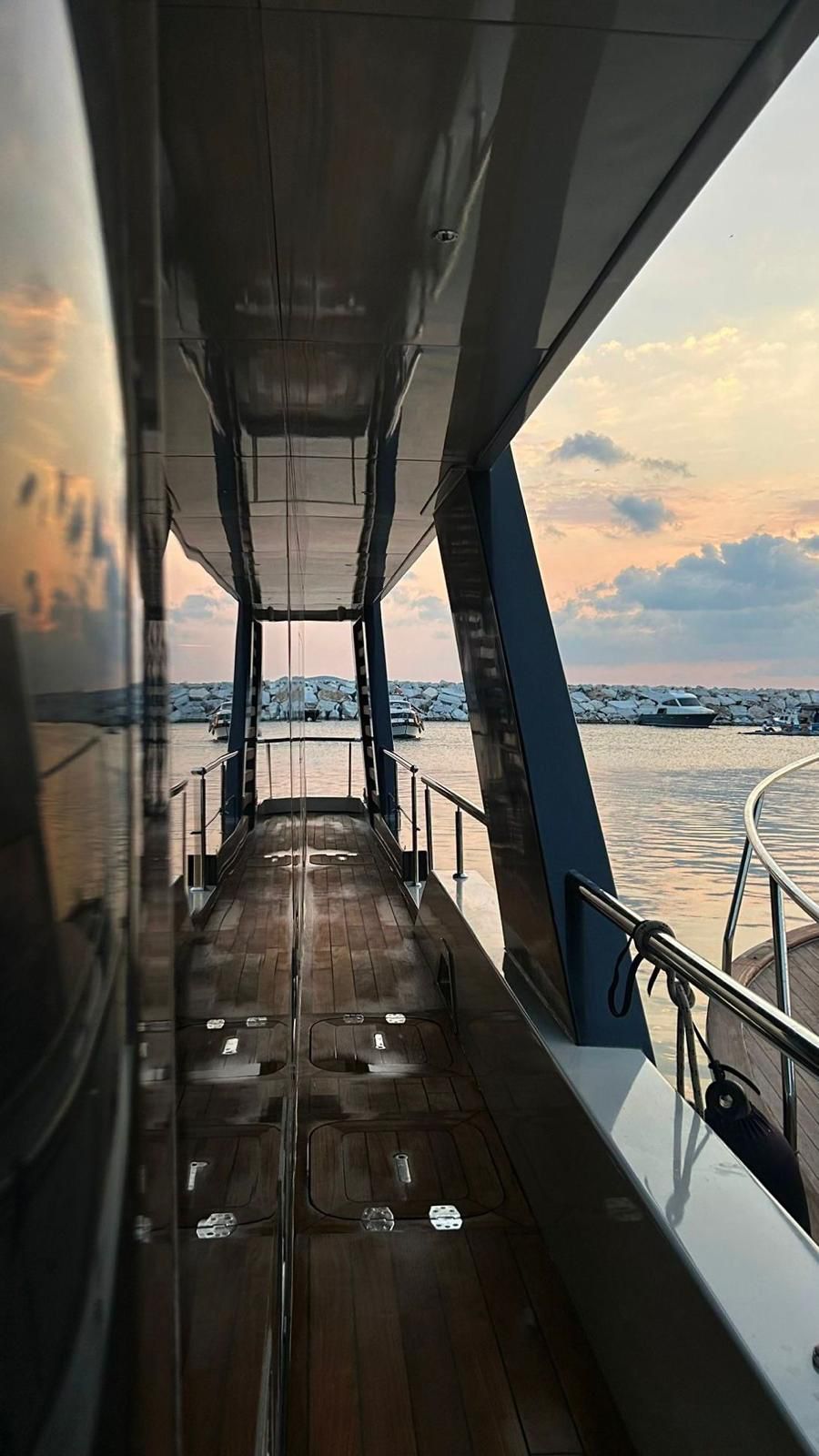
Living on water is not simply a change of address.
It is a shift in rhythm, perception, and priorities — one that many people don’t fully understand until they experience it.
Unlike traditional homes or yachts designed for short stays, floating living introduces a different relationship with time, space, and movement.
Silence Becomes a Feature
One of the first things people notice when living on water is the absence of noise.
No traffic.
No neighbors through walls.
No constant urban background sound.
Instead, there is movement without disturbance — water, wind, light. This quiet environment has a measurable effect on stress levels and daily focus, especially for those used to dense cities.
Your Sense of Time Slows Down
On land, time is structured by schedules, traffic, and routines.
On water, time follows light, weather, and natural cycles.
Mornings feel longer.
Evenings feel intentional.
Days become less fragmented.
This doesn’t mean productivity disappears — it changes. Many people living on water report improved concentration and clearer decision-making simply because their environment is calmer.
Movement Without Travel
A floating home moves, but it doesn’t feel like traveling.
This creates a unique balance:
- You are not fixed to one point
- Yet you are not constantly in transit
The view changes, the surroundings shift, but the interior remains familiar. This combination delivers a rare feeling: freedom without instability.
Space Feels Different on Water
Square meters on water are perceived differently than on land.
Natural light, horizon views, and openness make spaces feel larger and more breathable. When design prioritizes ceiling height, window placement, and flow — the home stops feeling like a vessel and starts feeling like a place.
This is why floating living requires a fundamentally different design mindset than traditional yachts.
Ownership Becomes Simpler
Living on water often simplifies life.
Less accumulation.
More intentional choices.
Clear separation between what you need and what you don’t.
This shift is not about minimalism — it’s about clarity. Many people describe floating living as mentally lighter, even when the home itself is generous in size and comfort.
Why Design Matters More Than Ever
All of these changes depend on one thing: design.
A poorly designed floating structure amplifies discomfort.
A well-designed one enhances calm, safety, and belonging.
Long-term living on water demands:
- Stability over speed
- Comfort over spectacle
- Function over excess
When these principles are respected, living on water stops feeling alternative — and starts feeling natural.
A Different Kind of Home
Floating living is not about escaping land.
It’s about redefining what home can be when boundaries soften.
For those who choose it, the change is subtle at first — and profound over time.
About Minoa
Minoa designs floating living spaces for people who don’t just visit the sea, but choose to live with it.